Recent Advances in Manufacturing Operations Management


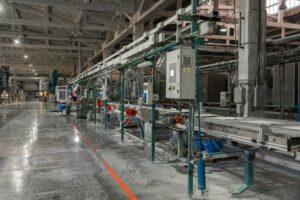
Manufacturing operations management has undergone significant transformations due to rapid technological advancements and evolving business needs. Efficiency, productivity, and sustainability have driven manufacturing operations in the modern world. From automation to data-driven decision-making, recent advances have enhanced the industry’s capacity to deliver high-quality products at reduced costs. This article explores the most notable innovations and their impact on manufacturing operations management.
Automation and Robotics
The introduction of automation and robotics in manufacturing operations has revolutionized production lines. Today, industries increasingly rely on robots for tasks that human workers once performed. Automation increases speed and precision and reduces errors and operational costs. Robots can now perform intricate tasks such as assembly, welding, and painting with unmatched accuracy. This has enabled companies to meet the growing demand for customization while maintaining consistency in production.
Moreover, automation has improved safety conditions on the factory floor. Robots handling dangerous tasks such as heavy lifting or working in hazardous environments significantly reduce the risk to human workers. As a result, manufacturers can focus on higher-value tasks such as product design and strategy. Furthermore, advancements in collaborative robots (cobots) allow human workers to work alongside robots safely, creating a more efficient and synergistic work environment. This collaborative approach is reshaping the role of the workforce in manufacturing operations.
Artificial Intelligence and Machine Learning
Artificial Intelligence (AI) and Machine Learning (ML) are also pivotal in reshaping manufacturing operations. These technologies enable the collection and analysis of vast amounts of real-time data, providing manufacturers with valuable insights. AI and ML algorithms can predict maintenance needs, optimize production schedules, and detect quality issues before they become costly problems. For instance, AI-powered predictive maintenance allows manufacturers to anticipate equipment failure and schedule repairs, reducing downtime and preventing expensive breakdowns.
In addition, AI-driven optimization algorithms are streamlining inventory management. By analyzing historical data and market trends, AI can help manufacturers forecast demand more accurately, ensuring that the right materials are available at the right time. This improves efficiency and minimizes waste, contributing to sustainability efforts. With AI and ML, manufacturers can make data-driven decisions that enhance both short-term operations and long-term strategic goals.
Additive Manufacturing
Another significant advancement in manufacturing operations management is the rise of additive manufacturing, commonly known as 3D printing. This technology has enabled companies to produce complex parts and prototypes quickly and cost-effectively. Unlike traditional manufacturing methods, which often require expensive molds or tooling, additive manufacturing builds products layer by layer, offering unparalleled design flexibility. This has opened up new possibilities for producing custom and on-demand parts, reducing lead times and inventory costs.
Furthermore, additive manufacturing has gained traction in aerospace, automotive, and healthcare industries, requiring lightweight, durable, and highly specialized components. The technology has also made prototyping and testing new product designs easier, accelerating product development. As the technology continues to mature, integrating 3D printing with other manufacturing processes is expected to create more streamlined and efficient production workflows, offering both flexibility and scalability to manufacturers.
Supply Chain Digitalization
The digitalization of supply chains is another significant development in manufacturing operations. Integrating technologies such as the Internet of Things (IoT), blockchain, and cloud computing has enhanced the visibility and traceability of materials and products throughout the supply chain. IoT sensors provide real-time data on inventory levels, machine performance, and environmental conditions, allowing manufacturers to track and manage assets more efficiently. This real-time information enables proactive decision-making, minimizing disruptions and delays.
In addition, blockchain technology offers a secure and transparent way to track the movement of goods across the supply chain. This enhances trust between suppliers, manufacturers, and consumers, reducing fraud and errors. Digitalization also allows manufacturers to collaborate more effectively with suppliers and customers by sharing information seamlessly across platforms. As supply chains become more interconnected, digital tools empower manufacturers to optimize their operations and respond more quickly to changing market demands.
Sustainability and Green Manufacturing
Sustainability has become a central focus in manufacturing operations. As consumers and governments increasingly demand environmentally friendly products and processes, manufacturers are adopting green manufacturing practices to reduce their environmental footprint. This includes using renewable energy sources, waste reduction, and sustainable material sourcing. Additionally, manufacturers are leveraging energy-efficient technologies and recycling methods to conserve resources and minimize pollution.
Manufacturing operations are also becoming more circular. Rather than following the traditional linear take-make-dispose model, many manufacturers embrace a circular economy, where products are designed for reuse, repair, and recycling. This approach helps reduce environmental impact and creates new opportunities for innovation and cost savings. By adopting sustainable practices, manufacturers can meet regulatory requirements, improve their brand reputation, and appeal to environmentally conscious consumers.
Data-Driven Decision Making
The shift toward data-driven decision-making is transforming how manufacturing operations are managed. Manufacturers can gain insights into production processes, performance, and quality by collecting vast amounts of data from various sources—such as sensors, machines, and enterprise resource planning (ERP) systems. This wealth of information can be used to optimize everything from inventory management to workforce allocation. Real-time data allows managers to identify bottlenecks, reduce waste, and make more informed decisions about production schedules.
Moreover, data analytics helps to uncover patterns that may not be immediately obvious. For example, analyzing production data can reveal inefficiencies in specific workflows, allowing for process improvements. Predictive analytics also forecasts demand, ensuring manufacturers can adjust production rates and inventory levels accordingly. As data analytics tools become more advanced, manufacturers are gaining a competitive edge by making faster, more accurate decisions based on real-time information.
Recent advancements in manufacturing operations management are profoundly reshaping the industry. Automation and robotics stream stream production processes, while AI and machine learning enhance decision-making and predictive capabilities. Additive manufacturing offers unprecedented design flexibility, and digitalization is transforming supply chains into interconnected, data-driven networks. Furthermore, the focus on sustainability and green manufacturing drives more environmentally conscious practices. With the continued integration of these technologies, the future of manufacturing operations looks more efficient, sustainable, and adaptable than ever before.